Description: A healthcare algorithm designed to equitably distribute caregiving resources is alleged to have drastically cut care hours for the disabled and elderly, purportedly leading to significant hardships and harm. Initially developed for fair resource allocation, the system reportedly faced legal challenges for its inability to accurately assess individual needs, resulting in allegedly reduced essential care.
Entities
View all entitiesAlleged: State governments and Brant Fries developed an AI system deployed by Washington DC government , State governments , Pennsylvania state government , Missouri state government , Iowa state government , Idaho state government and Arkansas state government, which harmed Tammy Dobbs , Larkin Seiler , Economically vulnerable people , Economically vulnerable patients , Elderly individuals and People with disabilities.
Alleged implicated AI system: Algorithmic home care assistance allocation systems
CSETv1 Taxonomy Classifications
Taxonomy DetailsIncident Number
The number of the incident in the AI Incident Database.
603
Notes (special interest intangible harm)
Input any notes that may help explain your answers.
4.2 - The algorithm that cut Seiler's care in 2008 was declared unconstitutional by the court in 2016.
Special Interest Intangible Harm
An assessment of whether a special interest intangible harm occurred. This assessment does not consider the context of the intangible harm, if an AI was involved, or if there is characterizable class or subgroup of harmed entities. It is also not assessing if an intangible harm occurred. It is only asking if a special interest intangible harm occurred.
yes
Date of Incident Year
The year in which the incident occurred. If there are multiple harms or occurrences of the incident, list the earliest. If a precise date is unavailable, but the available sources provide a basis for estimating the year, estimate. Otherwise, leave blank.
Enter in the format of YYYY
2008
Date of Incident Month
The month in which the incident occurred. If there are multiple harms or occurrences of the incident, list the earliest. If a precise date is unavailable, but the available sources provide a basis for estimating the month, estimate. Otherwise, leave blank.
Enter in the format of MM
Date of Incident Day
The day on which the incident occurred. If a precise date is unavailable, leave blank.
Enter in the format of DD
Risk Subdomain
A further 23 subdomains create an accessible and understandable classification of hazards and harms associated with AI
7.3. Lack of capability or robustness
Risk Domain
The Domain Taxonomy of AI Risks classifies risks into seven AI risk domains: (1) Discrimination & toxicity, (2) Privacy & security, (3) Misinformation, (4) Malicious actors & misuse, (5) Human-computer interaction, (6) Socioeconomic & environmental harms, and (7) AI system safety, failures & limitations.
- AI system safety, failures, and limitations
Entity
Which, if any, entity is presented as the main cause of the risk
AI
Timing
The stage in the AI lifecycle at which the risk is presented as occurring
Post-deployment
Intent
Whether the risk is presented as occurring as an expected or unexpected outcome from pursuing a goal
Intentional
Incident Reports
Reports Timeline

Loading...
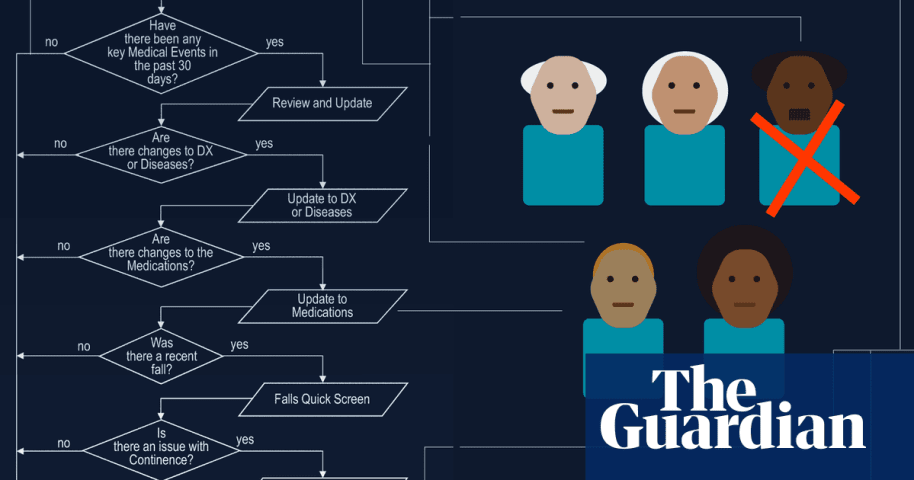
Going up against an algorithm was a battle unlike any other Larkin Seiler had faced.
Because of his cerebral palsy, the 40-year-old, who works at an environmental engineering firm and loves attending sports games of nearly any type, depends…
Variants
A "variant" is an AI incident similar to a known case—it has the same causes, harms, and AI system. Instead of listing it separately, we group it under the first reported incident. Unlike other incidents, variants do not need to have been reported outside the AIID. Learn more from the research paper.
Seen something similar?
Similar Incidents
Did our AI mess up? Flag the unrelated incidents

Similar Incidents
Did our AI mess up? Flag the unrelated incidents