Associated Incidents
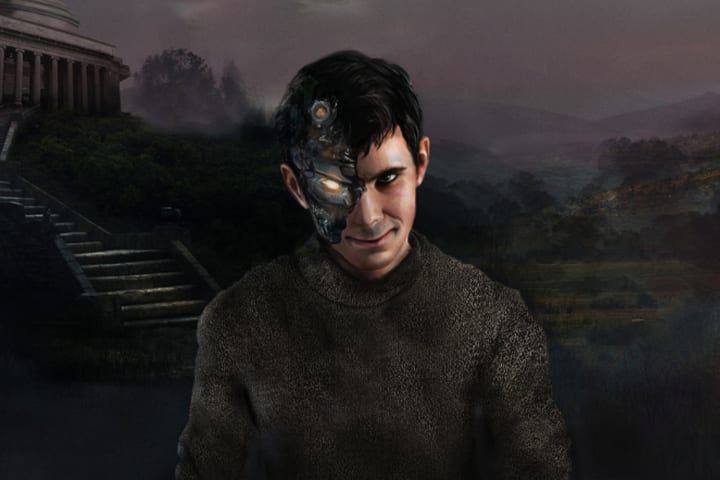
Scientists at the Massachusetts Institute of Technology unveiled the first artificial intelligence algorithm trained to be a psychopath. The AI was fittingly dubbed “Norman” after Norman Bates, the notorious killer in Alfred Hitchcock’s Psycho.
MIT scientists Pinar Yanardag, Manuel Cebrian and Iyad Rahwan trained Norman to perform image captioning, “a deep learning method” that allows AI to generate text descriptions for images. However, the team exclusively exposed Norman to violent and disturbing images posted on a subreddit dedicated to death.
They then gave Norman a Rorschach inkblot test and the AI responded with chilling interpretations such as, “a man is electrocuted and catches to death,” “pregnant woman falls at construction” and “man is shot dead in front of his screaming wife.” Meanwhile, a standard AI responded to the same inkblots with, “a close up of a vase with flowers,” “a couple of people standing next to each other” and “a person is holding an umbrella in the air.”
While Norman may conjure dystopian images of killer robots, the MIT team said the purpose of the experiment was to prove that AI algorithms aren’t inherently biased, but that data input methods – and the people inputting that data – can significantly alter an AI’s behavior. As Newsweek pointed out, there have been several notable cases where racism and bias have crept into machine learning, like the Google Photos image recognition algorithm that was classifying black people as “gorillas.”
“So when people say that AI algorithms can be biased and unfair, the culprit is often not the algorithm itself, but the biased data that was fed to it,” the Norman team said. “The same method can see very different things in an image, even ‘sick’ things, if trained on the wrong (or, the right!) data set.”
However, AI algorithms can unlearn biases. The MIT team has set up a website where people can enter cheerier interpretations of Rorschach inkblots to quell Norman’s macabre state of mind.