Associated Incidents
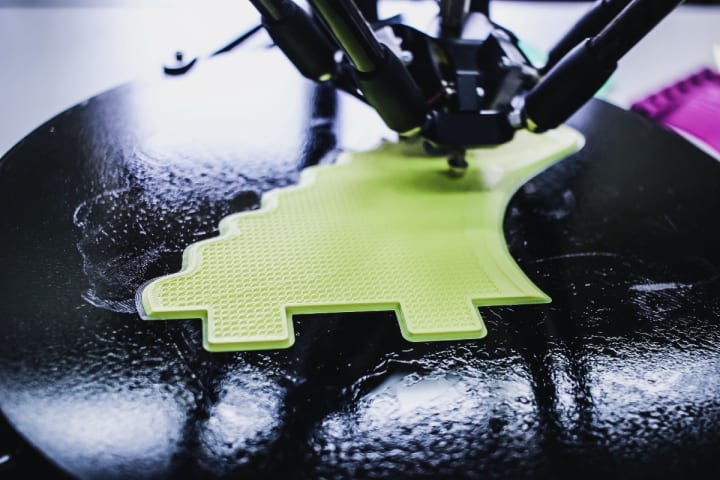
Tesla’s Factory Woes Reveals Why You Shouldn’t Automate Everything
Carlos E. Perez Blocked Unblock Follow Following Mar 29, 2018
Photo by Ines Álvarez Fdez on Unsplash
There are new reports that Tesla’s AI strategy to automate their entire manufacturing process is failing to deliver the productivity they had hoped for. Business Insider reports that “Wall Street analysts have laid down a compelling argument that over-automation is to blame.” The report details the arguments as to why not everything needs to be automated:
But while all that exotic capital might allow Tesla to remove 5 workers, it will then need to hire a skilled engineer to manage, programme and maintain robots for $100 an hour.
A balance must be maintained between the manageability of advanced AI technology and the tasks that can be performed by a reasonably skilled employee. There will always be tasks in the process where the costs for automation is not worth it. A majority of costs in AI is upfront, this upfront cost can spiral out of control if the problem is beyond what present-day AI is capable of doing. This is the problem with many AI endeavors, too many are lured into the science fiction thinking that AI already exists today. One should never convert a task to improve productivity into a task to do academic research. Understanding what AI can and cannot do well is critically important to control costs and avoid failure. Do yourself a favor and hire a Deep Learning expert for an hour to tell you what not to do.
The Japanese who historically have a much more advanced experience working with automation know the problem better. The Japanese approach is to first get the process right and then bring in the robots. In fact, this approach translates well not only in manufacturing automation but also in knowledge-based work.
It is important to remember that today’s lean methodology we find in software development can be traced back to lean manufacturing methods of the Japanese. Lean’s core value is simple: maximize customer value while minimizing waste. These ideas work in manufacturing as well as in knowledge-driven industries.
In the book “The Deep Learning AI Playbook”, I introduced the Deep Learning Canvas and the framework at its core is the Jobs To Be Done (JTBD) approach applied to ‘Cognitive Load’. What we attempt to do is to map out the existing business process and identify specifically the JTBD of a customer (i.e. this could be an employee). JTBD identifies many tasks that a customer performs to do their job and we identify the cognitive load (constraint/impediment) that can be augmented with AI technology. The cognitive loads include lack of memory, information overload, lack of meaning and acting fast. Each kind is augmented with different kinds of Deep Learning (DL) driven technology. Specifically search, summarization, translation, and visualization. However, we should be pragmatic. We cannot expect DL to do everything.
Deep Learning Canvas
Rather, as DL technology incrementally improves over time, each JTBD that has been augmented by AI continues to improve. This in effect reduces the cognitive load of the user for each task and as a consequence allows the user to become more productive in their work. Productivity may translate in higher throughput, but ideally towards a better customer experience (See: DL for CX and XLA). The higher level objective should always be CX, after all, that is what motivates customers to invest in a relationship.
The value of AI is that it incorporates technology that is able to identify a users context and then deliver the appropriate goods or services at the right time. This is how value is created. This is how AI and processes are linked. In Lean Thinking, this is the assessment of the value stream to see if each step is “ valuable, capable, available, adequate and flexible”. The right way to employ AI automation into a business is to start with a strategy that incorporates an understanding of purpose, process and most importantly — people.