Associated Incidents
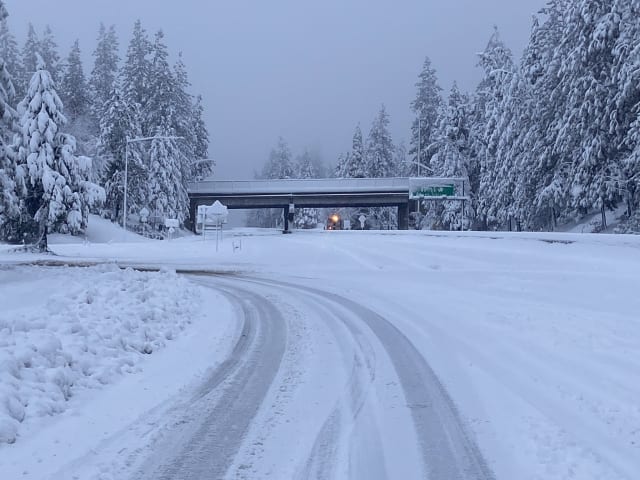
It appears that Google Maps may have guided weary Lake Tahoe travelers to closed-off and even dangerous roads amid record-setting snowfall.
Social media posts, including from Crystal Kolden, a professor of forest sciences at UC Merced, have condemned the service for redirecting travelers away from closed highways to potentially precarious shortcuts. “This is an abject failure,” tweeted Kolden Monday evening. “You are sending people up a poorly maintained forest road to their death in a severe blizzard.”
A screenshot she shared showed directions through Marysville Road, a fairly narrow, two-lane path going through the Tahoe National Forest.
(Kolden did not immediately respond to a request for comment from SFGATE.)
Other dispatches from Twitter allege that the service — particularly its mobile app — directed people to closed-off highways, mountain passes and lakeside roads to get around. This is in direct contrast to Caltrans' messaging to avoid workarounds. Caltrans District 3 spokesperson Steve Nelson told SFGATE on Monday that they were seeing drivers trying to skirt highway closures with side streets. "They’ll take side roads and try and sneak past the closures, and that never ends well," he said.
Kolden’s post got the attention of Google engineer Sören Meyer-Eppler, who said on Twitter he worked on “this problem” in the past and explained the challenges of guiding people through mountain roads. He also defended the service, noting the "trade-off" of offering convenient driving directions and fully accurate ones.
"[People are suggesting] if you can't get driving directions and road closures right 100% of the time, you shouldn't offer any. Surely that would be a worse trade-off than the status quo?" he wrote. "Consider that we don't know a priori which mistake is potentially dangerous."
A Google spokesperson told SFGATE that it is currently taking preventative measures to ensure that drivers remain safe while driving around the Lake Tahoe area.
"In light of the unpredictable conditions from the current snowstorm, our team is working as quickly as possible to update routes in the Lake Tahoe area using details from local authorities," the spokesperson said in a statement. "We currently show a winter storm warning to alert drivers in the area, and encourage everyone to stay alert and attentive."
Officials continue to advise that drivers stay home, if possible, and to drive carefully if absolutely necessary.