Associated Incidents
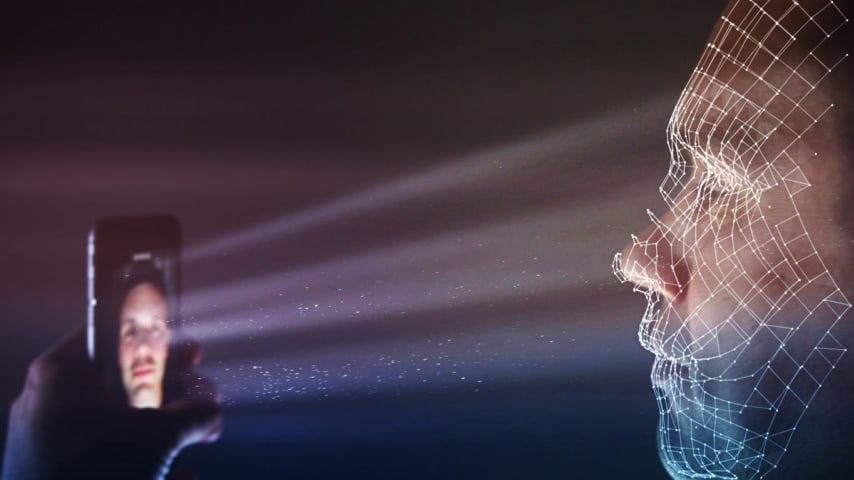
Teaneck just banned facial recognition technology for police. Here's why
Show Caption Hide Caption Facial recognition program that works even if you’re wearing a mask A Japanese company says they’ve developed a system that can bypass face coverings for facial recognition. Veuer’s Tony Spitz has the details. Buzz60
TEANECK — The Township Council has banned the use of facial recognition software by police in a unanimous vote, joining a nascent movement to banish a technology that has been criticized as potentially biased.
Even as private companies continue to create huge databases of images from social media, and facial recognition is employed for surveillance and airport passenger screening, a growing body of evidence shows that the algorithms do a poorer job of identifying women and Black and Asian faces.
In January, New Jersey Attorney General Gurbir Grewal barred police statewide from using a facial recognition app from a company called Clearview AI, which The New York Times reported had amassed a database of billions of photos from sites like Facebook, YouTube and Twitter. The company licenses its product to police departments.
However, Teaneck is the first town in New Jersey to ban the controversial technology outright, said Councilman Keith Kaplan.
"Now is not the time to let this technology in our municipality," he said. "Some of the people being targeted have absolutely no connection to a crime and are incarcerated based on an algorithm. We need to protect the civil rights of our residents."
In 2019, Paterson resident Nijeer Parks was arrested on charges of shoplifting in Woodbridge after police identified him using facial recognition software, but Parks was nowhere near Woodbridge at the time of the incident. He spent 10 days in jail and is now suing the city and its Police Department.
He was one of several Black men who have been wrongfully arrested based on faulty facial recognition software.
“I don’t think he looks like me,” Parks said when comparing the image to himself at the time of his arrest. “The only thing we have in common is the beard.”
We just banned Facial Recognition use by the @TeaneckNJGov Police Department and Township Officials. https://t.co/DK4e8FLBnq pic.twitter.com/ZkOST8MJs4 — Councilman Keith Kaplan (@Cm_KeithKaplan) February 24, 2021
Facial recognition software is only as good as the underlying algorithm. A study by the National Institute of Standards and Technology, a government agency, involving a variety of commercial software found that Black and Asian faces were 10 to 100 times more likely to be misidentified than Caucasian faces.
In 2019, San Francisco, a hub for the technology revolution, became the first major city to ban facial recognition software.
Other areas, however, aren't convinced that facial technology is a detriment. Late last year, the Boston Globe reported that Massachusetts Gov. Charlie Baker had refused to sign a law banning most government use of facial recognition
In Teaneck, the ban on the technology is for now largely symbolic. The town is just getting around to equipping all of its police officers with body cameras to increase transparency.
"Right now, the benefits of having body cams outweigh the detriments, but having facial technology, finding people based on faulty algorithms, is a bit of a different story," Kaplan said.
Police did not immediately respond to a request for comment.