Associated Incidents
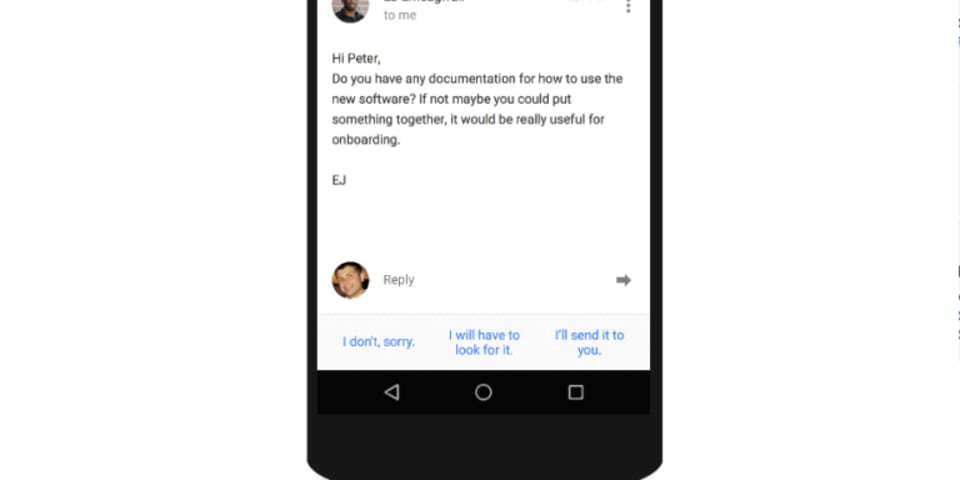
Just a few months ago, Google really started showing off its newest secret weapon: a robot brain that learns. Using machine learning algorithms that actually get smarter as they practice, Google's been able to identify your loved ones in your photo albums, and figure out what you might want to search for based on what's on your phone screen. And soon, it could be answering your emails too.
The new feature is called "Smart Reply" and it's for Inbox, the fancy new Gmail alternative Google announced a while back. When you're using it, Smart Reply is simple; you just get a handful of prewritten options to respond to emails, and you can either select one and send it off, or ignore them and type one in yourself.
Behind the scenes however, this is a massive accomplishment. A computer is reading your email (slightly creepy but nothing new) and understanding its meaning. It's not as simple as just identifying a few keywords like "plans" and then spitting out a few auto-responses about "I'll send them." Google's machine learning algorithms actually learn from scratch by reading thousands of emails and thousands of responses, slowly getting better and better at predicting what kind of responses match up with what kind of emails.
In an in-depth post about how this tech actually works, Google shared some fun anecdotes about the initial prototypes. Some of the early versions of the tech were a little too lovey, for instance:
[A] bizarre feature of our early prototype was its propensity to respond with "I love you" to seemingly anything. As adorable as this sounds, it wasn't really what we were hoping for. Some analysis revealed that the system was doing exactly what we'd trained it to do, generate likely responses -- and it turns out that responses like "Thanks", "Sounds good", and "I love you" are super common -- so the system would lean on them as a safe bet if it was unsure.
The new feature will be rolling out to Inbox users later this week, and even if it's not perfect yet, it'll only get better as time goes on.
Source: Google