Associated Incidents
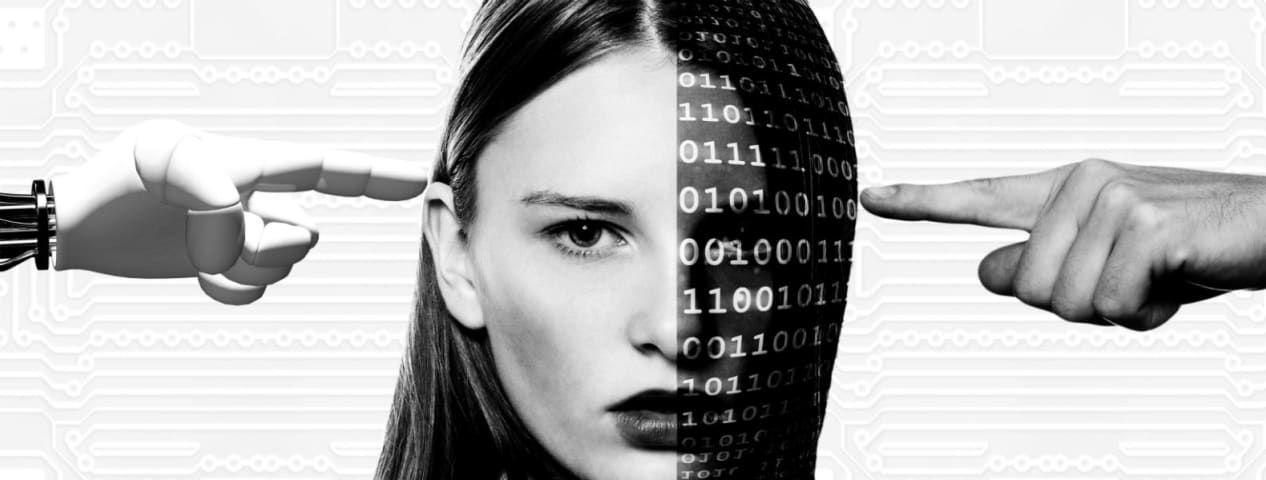
It’s long been thought that robots equipped with artificial intelligence would be the cold, purely objective counterpart to humans’ emotional subjectivity. Unfortunately, it would seem that many of our imperfections have found their way into the machines. It turns out that these A.I. and machine-learning tools can have blind spots when it comes to women and minorities. This is especially concerning, considering that many companies, governmental organizations, and even hospitals are using machine learning and other A.I. tools to help with everything from preventing and treating injuries and diseases to predicting creditworthiness for loan applicants.
These racial and gender biases have manifested in a variety of ways. Last year, Beauty.AI set out to be the completely objective judge of an international beauty contest. Using factors such as facial symmetry, Beauty.AI assessed roughly 6,000 photos from over 100 countries to establish the most beautiful people. Out of the 44 winners, nearly all were white, a handful were Asian, and only one had dark skin. This is despite the fact that many people of color submitted photos, including large groups from India and Africa. Even worse was in 2015, when Google’s photo software tagged two black users as “gorillas,” due to a lack of examples of people of color in its database.
The crux of the issue stems from A.I.’s reliance on data. Even though the data may be accurate, it could lead to stereotyping. For example, a machine may incorrectly gender a nurse as female, since data shows that fewer men are nurses. In another example, researchers applied a dataset with black dogs and white and brown cats. Given the data, the algorithm incorrectly labeled a white dog as a cat. In other cases, the algorithm may be trained by the people using it, resulting in the machine picking up the biases of human users.
In 2016, researchers attempted to weed out gender biases from a machine learning algorithm. In the paper “Man is to Computer Programmer as Woman is to Homemaker?” the researchers attempted to differentiate legitimate correlations from biased ones. A legitimate correlation may look like “man is to king as woman is to queen,” while a biased one would be “man is to doctor as woman is to nurse.” By “using crowd-worker evaluation as well as standard benchmarks, [the researchers] empirically demonstrate that [their] algorithms significantly reduce gender bias in embeddings while preserving the its [sic] useful properties such as the ability to cluster related concepts and to solve analogy tasks,” concluded the study. Now, the same researchers are applying this strategy to remove racial biases.
Adam Kalai, a Microsoft researcher who co-authored the paper, said that “we have to teach our algorithms which are good associations and which are bad the same way we teach our kids.”
Researchers have also suggested that using different algorithms to classify two groups represented in a set of data, rather than using the same measurement on everyone, could help curb biases in artificial intelligence.
Regardless, many claim that it will be years until this bias problem is solved, severely limiting artificial intelligence until then. However, the problem has caught the attention of many of the major players in A.I. and machine learning who are now working to improve the technology to both curb biases and help understand A.I.’s decision-making process. Google uses their GlassBox initiative — where researchers are studying the application of manual restrictions to machine learning systems — in order to make their outputs more understandable. However, it may be possible that until the creator’s own conscious and unconscious biases are reduced, the created will continue to have these issues.