Associated Incidents
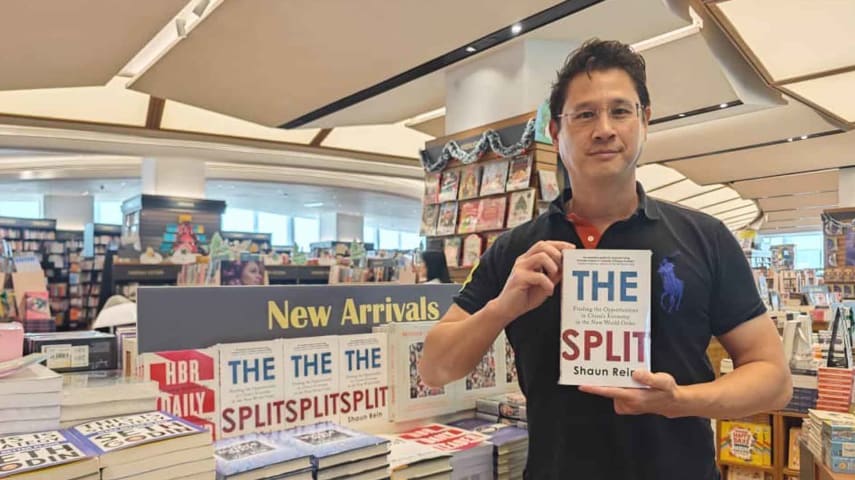
An author who discovered “deepfake” YouTube videos of himself reading chapters of a book published in the UK by Hachette has suggested that video content is a “dangerous” new battle for publishers when it comes to breaches of copyright through AI.
Shaun Rein, founder and managing director of the China Market Research Group, who is American-born but lives in Shanghai, told The Bookseller the videos were so convincing “it was really hard to realise that it wasn’t me”.
Rein is the author of four books, including The Split, published by John Murray Press in 2024. Seven podcast-format videos based on chapters of The Split and appearing to have been voiced by Rein have racked up more than 200,000 streams on YouTube in one week.
Rein told The Bookseller: “People started messaging me saying: ‘Shaun, what a wonderful podcast on your book!’ I was like, I don’t remember doing a recording about my book in this format. I went on YouTube, listened, and it was really hard for me to realise that it wasn’t me.”
The author said he had no knowledge of the videos published on The US-China Narrative YouTube channel, which appears to be based in Singapore, and suggested the videos were made by downloading samples of his voice from publicly available interviews.
“It was my voice. The cadence and intonation was mine, and they’d used my words. The only way that I knew that it wasn’t me, and was AI, was when it was in Chinese,” he said. “I don’t do audio recordings in Mandarin very often, so people weren’t able to take my voice and apply it in AI. When I was speaking Chinese on the YouTube show, it was clearly not me.”
He added: “It took me two and a half years to write this book. It is copyright infringement. Why should someone else use my words and make money off of it? I’d say 95% of the text in the videos are my words.”
Rein is concerned that his agent and his publisher will not get a fair cut from the work. While the seven videos published so far seem to value the source material, Rein is most worried about losing control of the words appearing to come out of his mouth.
“This is dangerous, especially since I am neither 100% supportive of the US government nor the Chinese government,” he said. “YouTube needs to do a better job of policing this and ensuring that these AI deepfakes are taken down or, at least, marked as fakes.”
Rein’s UK-based global agent Chris Newson told The Bookseller: “We’re really worried about the use of Shaun’s image and voice for more nefarious issues. There’s already a fake Twitter [X] account saying things which are completely the opposite of what he writes and feels. The next step will be somebody using his image and voice to create counterproductive and quite nasty content. Book sales is one thing, but losing credibility is another.”
In a complex landscape of territorial rights deals, neither Rein or Newson seem to know what steps to take when it comes to asking for the removal of infringing material in multiple jurisdictions when the printed material has been sold in the UK and other regions.
Holly Bennion, editorial director at John Murray Business, told The Bookseller that the publisher “condemned all infringement of copyright holders’ rights,” adding: “There is a significant commercial impact of infringements of this nature for our authors, agents, suppliers and business. We have an ongoing relationship with YouTube and strategies in place for AI and anti-piracy operations, with policies in place for working with social media companies. We also work closely with our authors and agents to agree any actions taken in such events.”
One result of the arrival of the deepfakes is that Rein says sales of his books on Amazon have gone up. He warns that part of the issue is that the AI video generators are finding a way to monetise material in ways that publishing so far does not typically do.
“Publishers in general are really backward with their marketing strategy so these AI guys are filling in the gaps. One of those videos got 70,000 views in 24 hours, so obviously people want to hear the content. They just want it in a different format,” he said.
“This is a real problem, because why would anybody buy my book, especially the audio version, when they can get it essentially for free on YouTube, and it’s my voice... It is copyright infringement. Writers need to be able to make a living.”
The Bookseller understands that YouTube enforces its content policy regardless of whether the content is generated using AI, including with regard to copyright law. Any rights holders can submit a copyright removal request.
Anna Ganley, chief executive officer of the Society of Authors, told The Bookseller: “Generative AI systems that imitate authors’ voices and styles, produce deepfakes or make unauthorised use of authors’ works and likenesses undermine the UK’s copyright framework and threaten the very sustainability of our creative industries.
“This goes beyond copyright laws as tech companies are helping themselves to the broader intellectual property and personal data of the creative workforce without consent, transparency or payment.”