Associated Incidents
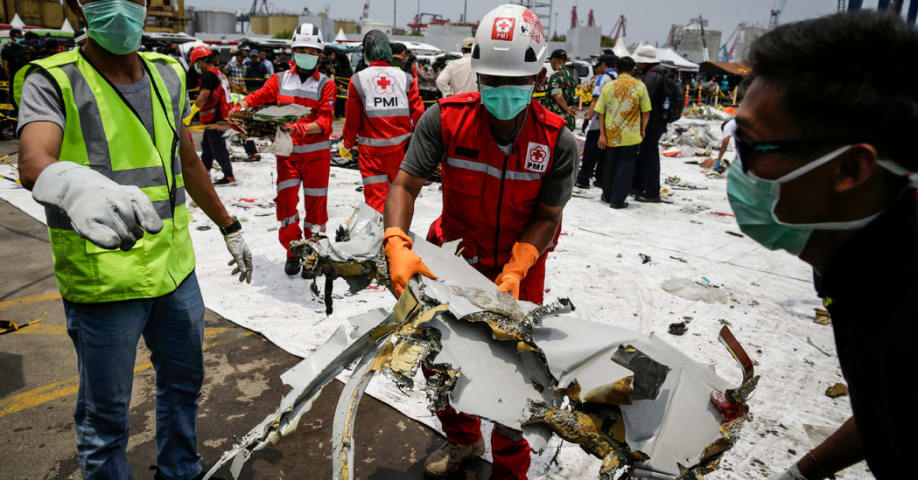
Investigators have yet to recover the cockpit voice recorder, which could provide further insight into the steps taken by the pilots and whether they followed the correct procedures.
Despite Boeing’s insistence that the proper procedures were in the handbook, also called the emergency checklist, pilots have said since the accident that Boeing had not been clear about one potentially vital difference between the system on the new 737s and the older models. In the older versions, pilots could help address the problem of the nose being forced down improperly — a situation known as “runaway stabilizer trim” — by pulling back on the control column in front of them, the pilots say.
In the latest 737 generation, called the Max, that measure does not work, they said, citing information they have received since the crash. The pilots on Lion Air Flight 610 appear to have forcefully pulled back on their control columns to no avail, before the final dive, according to the information from the flight data recorder.
Capt. Dennis Tajer, spokesman for the American Airlines pilot union and a 737 pilot, said he could not comment on any aspect of the investigation. But, he said, “in the previous model of the 737, pulling back on the control column, Boeing says will stop a stabilizer runaway.”
Information provided to American Airlines from Boeing since the crash, Captain Tajer said, “specifically says that pulling back on the control column in the Max will not stop the runaway if M.C.A.S. is triggered. That is an important difference to know.”
Boeing said in its statement on Tuesday that the existing procedures covered the latest 737 model.
Bulletins from Boeing and the Federal Aviation Administration of the United States since the crash indicate that pilots could overcome an incorrectly activated M.C.A.S. with a series of steps. First, they would have had to activate switches on the outside of the control columns in front of both the pilot and co-pilot. Those switches are for electrically controlling the trim — the angle of the stabilizers on the plane’s tail. The pilot of Flight 610 appears to have done that repeatedly to bring the nose up, but the M.C.A.S. reactivated each time, as it was designed to do, forcing the nose back down, and the pilot had to repeat the process again and again.