Associated Incidents
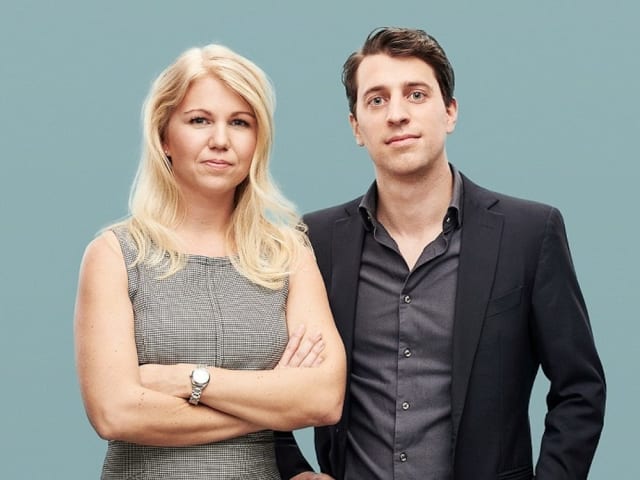
The birth-control app Natural Cycles has come under fire in Sweden after 37 women reported getting pregnant while using it.
The app, designed by physicist couple Elina Berglund and Raoul Scherwitzl, was the world's first to get approval in Europe as a contraceptive. It takes into account many factors involved in fertility, including woman's temperature, the regularity of her periods, and sperm survival, then suggests which days to have or refrain from sex to avoid pregnancy.
"We give red and green days and clear recommendations on which days to abstain and which days we consider the risk of pregnancy to be negligible," Natural Cycles co-founder Scherwitzl told Business Insider.
The app was initially portrayed by multiple news outlets — including Business Insider — as "as effective as the pill using only math," but the problem is that it relies on couples to change their behavior and abstain from sex or use protection when the app says to do so.
A spokesperson for the Sweden's Medical Products Agency told Business Insider's Shona Ghosh that they've launched an investigation into the complaints.
Scherwitzl told Business Insider that the reports coming out of Sweden don't surprise him, however, because the app is not 100% effective at preventing pregnancy.
"Just like with the pill you have scenarios where women take the pill everyday" and it's as reliable as possible and "scenarios where they don't take it every day" and the reliability decreases, said Scherwitzl.
That said, the app is not a pill and contains no medication. It only helps to prevent pregnancy so long as the people who are using it behave in the way it prescribes. That means avoiding sex or using protection on specific days every month, taking temperature measurements every day, and being able to accurately track the regularity of your periods.
These requirements put Natural Cycles in a larger category of birth control known as fertility awareness — otherwise known as using a calendar.
Still, if it is used properly, the app may be comparable in effectiveness to the pill, one clinical study published by the company's founders suggests. For that study, published in the European Journal of Contraception and Reproductive Health Care, researchers looked at more than 4,000 women between the ages of 18 and 45.
For every 100 women who used the app in a "typical" way each year (meaning certain common slip-ups were accounted for), seven of them got pregnant.
That's a smaller number than the "typical use" scenario for the pill, which leads to about nine out of 100 women getting pregnant each year. It's also lower than traditional fertility-based awareness methods like the calendar method, which have an average fail rate of 24%, according to the CDC.
But that's still more pregnancies than would be seen when using injectable birth control or an IUD. The typical use fail rate for an IUD is 0.2-0.8%, or less than one out of 100 women getting pregnant each year.
The same study came to another surprising conclusion, however: more than half of the women who got pregnant while using the app had unprotected sex with men on the days when the app advised against it.
"While smartphone apps may provide encouragement, they can't stop [men and women] from wanting to have sex altogether," Susan Walker, a professor of sexual health at Anglia Ruskin University, wrote in an article for The Conversation.
That's just one of a handful of factors that can get in the way of the app working correctly, including having multiple sex partners or a partner who is not equally committed to birth control.
So if you're planning on using the app — or one of the dozens like it that have not been approved as medical devices — experts say you should have a predictable sex schedule, regular periods, the willingness to check your temperature every day, and the time and ability to abstain from sexual activity on certain consecutive days every month. If you can do that, the app could work for you.
"In the end, what we want to do is add a new method of contraception that women can choose from without side effects," Scherwitzl said. "I think there are many women who this will be great for."