Associated Incidents
A TikTok spokesperson didn't answer questions from BuzzFeed News about how the company polices videos on the platform, but reaffirmed its commitment to getting rid of them.
The app's "Need Help?" page provides contacts for the United States National Suicide Prevention Lifeline as well as general tips for finding support.
Melissa Wilton, who is the head of communications and engagement at Australian eating disorder advocacy group The Butterfly Foundation, acknowledged ByteDance's efforts to keep their users safe but said TikTok lags behind other platforms when it comes to eating disorders.
She pointed out that it is difficult for many TikTok users across the globe to access information that is relevant to their local support services and resources.
"The ByteDance head office is located in China with no offices in Australia to date. This makes getting a response or forming a relationship challenging," Wilton told BuzzFeed News. "Butterfly has a really good relationship with many global social media platforms such as Instagram and Twitter due to their local presence."
Users and experts have concerns that even videos about recovering from an eating disorder can be harmful, while acknowledging that their impacts are more complex. Some people find this content helps them, others find it triggering.
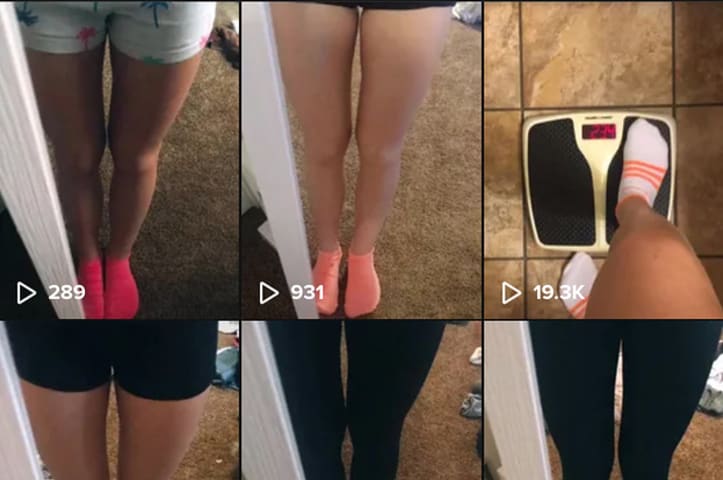
TIkTok's guidelines allow videos that provide "support, resources or coping mechanisms" for people with eating disorders. "EaTiNg DiSoRdEr ChEcK" and other sounds are filled with videos of people showing before and after pictures of their recovery, or documenting their daily life as they get better.
Some users say the videos are helpful. 21-year-old Chris Henrie uses TikTok to educate people about eating disorders. His videos — which often feature his experiences going through treatment for anorexia nervosa — have been liked more than 1.5 million times.
He said suffering from an eating disorder can cloud your judgement about what is and isn't appropriate to post.
"You tend to forget that your posts are reaching real, impressionable people, and posting triggering content is dangerous for both the creator and audience," Henrie said in a message. "In comparison, any post with a theme of recovery can inspire and educate the public on eating disorders in a fun, creative way."
Maddie Quinn is a 26-year-old TikTok user from the United States. She was motivated to make a video about her own recovery — which has been viewed nearly three million times — to counteract some of the potentially harmful videos she'd seen.
"I kept seeing all of these videos about weight loss, often right after videos of thin, beautiful people with millions of views and likes," Quinn said in a message. "So I wanted to challenge those standards and provide some support to people who might be struggling with EDs."
Quinn is worried about what she calls "pseudo-recovery" TikToks: videos that use recovery language but actually depict people engaging in harmful behaviours.
"I completely understand that making videos or other content is a way to cope, but I’ve noticed that a lot of these recovery videos give specific weights/numbers and show 'body checks' (thigh gaps, collar bones, etc.), which can be extremely triggering to people struggling with EDs," Quinn wrote.
New Zealand's Massey University researcher Dr Andrea LaMarre agreed that recovery TikTok videos can help, but that they don't usually represent the breadth of eating disorder recovery experiences.
"People can connect to other people, and it can allow them to see what recovery might look like," LaMarre said. "But in general, we only see the very polished version of what something is like. They can be exclusionary of what eating disorder recovery might look like."
Dr Gemma Sharp is a researcher at Australia's Monash University and a clinical psychologist. She said eating disorder recovery videos can be a double-edged sword as people with such disorders will seek out these videos to trigger themselves.
"I know from talking to some of my own patients that if they look at a site like this, they would see the before images and go 'I want to look like that'," " Sharp said. "It may even set them back. They wouldn't engage with the rest of the video."
Lily is still hopeful that ByteDance will crackdown on eating disorder videos — but said it won't make a difference to her.
"It wouldn't affect me much, I deleted TikTok," she said.