Associated Incidents
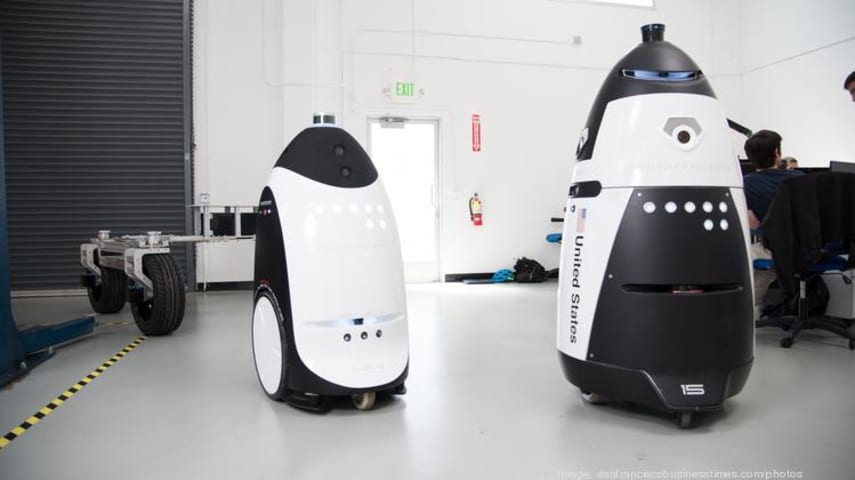
San Francisco residents continue to rage against the machines.
While the city's Board of Supervisors moves toward finalizing limits on robots that roam the sidewalks to deliver food and goods, it must also find a way to handle security robots that patrol public sidewalks.
The S.F. SPCA in the Mission District started using a security robot about a month ago in its parking lot and on the sidewalks around its campus, which takes up a whole city block at Florida and 16th Streets. Last week, the city ordered the SPCA to keep its robot off the sidewalks or face a penalty of up to $1,000 per day for operating in the public right-of-way without a permit.
The security robot is just the latest in a growing list of uses for robots around the city, from rental agents to food couriers. The robot surge could draw local government into more questions about its role in regulating the machines, especially if they operate in the public right-of-way.
For the SPCA, the security robot, which they've dubbed K9, was a way to try dealing with the growing number of needles, car break-ins and crime that seemed to emanate from nearby tent encampments of homeless people along the sidewalks.
“We weren’t able to use the sidewalks at all when there’s needles and tents and bikes, so from a walking standpoint I find the robot much easier to navigate than an encampment,” Jennifer Scarlett, the S.F. SPCA’s president, told the Business Times.
Once the SPCA started using the robot on the sidewalks around its campus in early November, Scarlett said, there were no more homeless encampments. There were also fewer break-ins to cars in the campus parking lot. It’s not clear that the robot was the cause of the decreases, Scarlett added, but they were correlated.
The people in the encampments showed their displeasure with the robot’s presence at least once. Within about a week of the robot starting its automated route along the sidewalks, some people setting up a camp “put a tarp over it, knocked it over and put barbecue sauce on all the sensors,” Scarlett said.
The robot upset local resident Fran Taylor, too. Last month, the robot approached Taylor while she walked her dog near the SPCA campus. Her dog started lunging and barking, she said, and Taylor yelled for the robot to stop. It finally came to a halt about 10 feet away, she said.
The encounter struck Taylor as an “unbelievable” coincidence since she had been working with pedestrian advocacy group Walk San Francisco in asking the city to limit sidewalk delivery robots. That legislation is expected to receive final approval soon but doesn’t apply to security robots like K9.
Taylor said she’s concerned about robots bumping into people on the sidewalks. She knows robots are often equipped with sensors so they don’t do that, she added, but “I don’t really trust that.”
She wrote an email to the SPCA the day of her encounter and copied several San Francisco government officials, including Mayor Ed Lee and members of the Board of Supervisors. The SPCA team responded and cited security concerns as the motivation for starting to use the robot.
On Dec. 1, the Department of Public Works sent the SPCA an email saying that the robot is operating in the public right-of-way "without a proper approval.” SPCA would have to stop using the robot on sidewalks or request a proper permit, according to the DPW email reviewed by the Business Times.
Scarlett said the SPCA stopped using the robot on the sidewalks and handed the issue over to the robot’s maker, Mountain View-based Knightscope, for further discussion with the city. Knightscope didn't respond to a request for comment about the status of those talks.
The robot is a K5 unit and has a top speed of three miles per hour, according to Knightscope’s website. The units are more than five feet tall and weigh 400 pounds. They are equipped with four cameras, “each capable of reading up to 300 license plates per minute” and sending alerts when trespassers or people on a “blacklist” are in an area.
In addition to her concerns about sidewalk safety, Taylor said the robot’s route and cameras seemed “like an obvious attack on the very people in San Francisco who are already having such a hard time surviving in this expensive city.”
Having humans replace the robot’s 24/7 shift would be “cost prohibitive,” though, Scarlett said. The robot costs about $6 per hour to rent, she said. The minimum wage in San Francisco is $14 per hour.
The SPCA also employs two security guards this time of year because its staff brings back animals at night from displays in the Macy’s store holiday window.
“I can understand being scared about a new technology on the street, and we should be asking questions about it, but we should probably be a little bit angry that a nonprofit has to spend so much on security at the same time,” Scarlett said. Ultimately, the S.F. SPCA wants to see a resolution of “the complicated issues around homelessness,” she added.
But she doesn’t see the robot trend going away, either.
“In five years we will look back on this and think, ‘We used to take selfies with these because they were so new,’” Scarlett said.