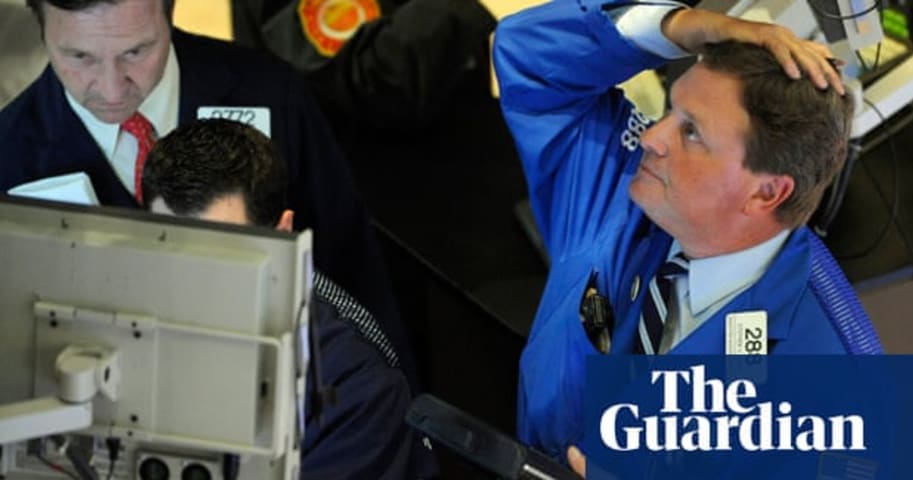
In just 20 minutes the New York Stock Exchange had witnessed it’s biggest stock plunge in decades, all traced to one gargantuan sell order
It was 6 May 2010. In the UK it was general election day, in the US,Wall Street was gripped by mounting anxiety about the Greek debt crisis. The euro was falling against the dollar and the yen, but despite the turbulent start to the trading day, no one had expected the near 1,000-point dive in share prices.
In a matter of minutes the Dow Jones index lost almost 9% of its value – in a sequences of events that quickly became known as “flash crash” . Hundreds of billions of dollars were wiped off the share prices of household name companies like Proctor & Gamble and General Electric. But the carnage , which took place at a speed never before witnessed, did not last long. The market rapidly regained its composure and eventually closed 3% lower.
'Flash crash' case: UK trader to fight extradition to US Read more
There was a frenzy of speculation about what might have caused the rout, with explanations ranging from fat fingered trading to a cyberattack. But within days, officials in the US were blaming big bets by a trader on Chicago’s derivatives exchange. By the end of September, an official report by the two main US regulators pointed to a $4.1bn (£2.7bn) sell order instigated by a US mutual fund, said to be Waddell & Reed.
At 2.32 pm, the mutual fund had used an automated algorithm trading strategy to sell contracts known as e-minis. It was the largest change in the daily position of any investor so far that year and sparked selling by other traders, including high frequency traders.
The official report by the Securities and Exchange Commission and the Commodity Futures Trading Commission outlined a “hot potato” effect as the HFTs started and buying and then reselling the e-mini contracts. Some orders were executed at “irrational prices” as low as one penny or as high as $100,000 before the share prices returned to their pre-crash levels by 3pm. In just 20 minutes, 2bn shares worth $56bn had changed hands.