CLOSE The cause of the 2010 Flash Crash keeps changing, and the latest who-done-it conclusion has met with skepticism on Wall Street. Jason Allen
Investors question how a small-fry trader moves markets, and why regulators let it go on so long.
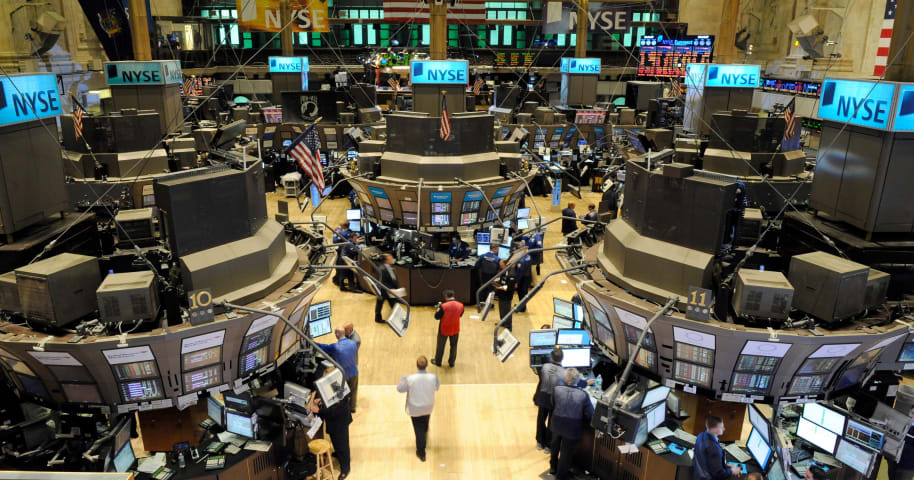
Traders work on the floor of the New York Stock Exchange on a day when the Dow Jones Industrial Average dropped about 1,000 points, in New York. Computers were blamed for the so-called "Flash Crash." (Photo: Henny Ray Abrams, AP)
The arrest of a London trader who allegedly helped cause the 2010 Flash Crash isn't boosting investors' confidence. It's spooking them.
"If this one random guy could impact billions of market value in seconds or milliseconds, what's going on?" billionaire entrepreneur Mark Cuban said in an interview.
"If a guy in his underwear can manipulate markets, anybody can. The optics look really, really bad," said Cuban, who owns the Dallas Mavericks NBA basketball team.
Investors from Wall Street to Main Street are expressing bewildered concern over Navinder Singh Sarao's alleged role in the Flash Crash on May 6, 2010, which caused the Dow Jones industrial Average to plunge nearly 600 points in five minutes.
The drop erased hundreds of billions in market value before the Dow inexplicably recovered minutes later. It left investors shell-shocked and sent regulators scrambling for ways to prevent such a dramatic plummet from happening again.
Sarao was arrested in London on Tuesday and said in court Wednesday that he opposed extradition to the USA to face charges.
Joe Saluzzi, co-founder of Themis Trading, which executes trades for large investors, called the details surrounding Sarao's arrest a "confidence-shattering event."
He questions whether other traders may be engaged in market-moving activities, and why it took regulators so long to catch on.
"I would like to hear from the (regulators) why did it go on for five years? And can they tell us confidently that there's no one else doing this currently?" Saluzzi said.
The Chicago Mercantile Exchange, or CME Group, questioned Sarao numerous times about his trading in 2010, only to be brushed off, according to the Justice Department's criminal complaint against Sarao, unsealed Tuesday.
In March 2010, a few months before the crash, Sarao allegedly asked CME whether its questions about his trading meant CME was ready to go after "mass manipulation" by high-frequency traders, according to the DOJ.
In a statement, CME said it is reviewing the Commodity Futures Trading Commission's claim, also released Tuesday, that Sarao was partially responsible for the crash.
"Following the Flash Crash on May 6, 2010, together with other regulators, we did a thorough analysis of all activity in our markets during the Flash Crash, and concluded — along with regulators — that the Flash Crash was not caused by the futures market," CME Group said in a statement. "If new information has come to light, we look forward to reviewing it with the (CFTC)," the statement said.
Sarao's alleged activities went from 2009 through this year and earned him an estimated $40 million in profits, said Aitan Goelman, head of enforcement at the CFTC. Authorities charge he manipulated a popular stock market futures index for his gain by placing large contract orders and quickly canceling them before they were executed.
Adding to concerns, the CFTC was alerted to Sarao's alleged misdeeds by a whistle-blower, who has not been identified, according to Shayne Stevenson, who represents the whistle-blower through Hagens Berman law firm in Seattle. Stevenson said his client brought "high-quality information" about "market manipulation" to the CFTC, which alerted the DOJ.
Stevenson declined to specify when his client went to the CFTC with the information.
One investor says the episode reminds him of the Bernard Madoff fraud case. Madoff, a securities broker, ran a Ponzi scheme that stole billions of dollars from investors. Regulators didn't catch on for years despite warnings, and the scheme finally fell apart in 2008 with Madoff's arrest.
"This reminds me of the Madoff scandal in that it took a private investigator to figure out what happened," said Stanley Haar, a commodities trader with Haar Capital. "Trading those huge volumes, this guy should have been caught within a week," Haar said of Saraoo.
Read or Share this story: http://usat.ly/1GjNrUH