It has been reported that a Delphi Automotive-owned self driving Audi was forced to take ‘appropriate action’ in order to avoid crashing into a Google self driving Lexus after it was cut off by the car.
John Absmeier was traveling in the Delphi Audi Q5 self driving car on San Antonio Road in Palo Alto, California when the clash happened. He has said that the car was forced to abort changing lanes as a result of the rival’s driving behaviour. After the incident, it was reported by Reuters as a ‘close call’ who used Absmeier’s comments in their article. But both Google and Delphi have tried very hard to say that the cars were both operating safely when the incident occurred.
Kristin Kinley, a Delphi spokeswoman, has said “The story was taken completely out of context when describing a type of complex driving scenario that can occur in the real world. Our expert provided an example of a lane change scenario that our car recently experienced which, coincidentally, was with one of the Google cars also on the road at that time”. Delphi also released a later statement saying that Reuters misrepresented the facts as the story was an “anecdote of interaction, not a ‘near miss'”.
Google has also stated that there was no threat of a collision during the incident and neither of the companies was at fault. However, Reuters have said that “the description differed from Delphi’s original account” while a spokesman has confirmed that Reuters “stands by the accuracy of its original story”. The California Department of Motor Vehicles has also backed up the stories by both companies, saying that neither was at fault during the incident.
The safety records of self driving cars are particularly protected by companies. A Google report that was published in May showed that 11 minor accidents had been suffered by the company’s fleet of self driving cars since 2009 when the program began. Chris Urmson, director of the program, said that none of the self driving cars were the cause of any incidents and many of the incidents were caused by other cars driving into the back of the Google vehicles.
Delphi has also reported one accident with its self driving cars which happened in October of last year. The report showed that the car had been broadsided by another vehicle while it was planning to make a left turn. The accident had to be reported under Californian law, but the Delphi car wasn’t actually in self driving mode at the time. By May this year, seven companies had gained self car testing permits in California, and there were 48 driverless cars on the road. None of the other five companies had reported any accidents or incidents at that point.
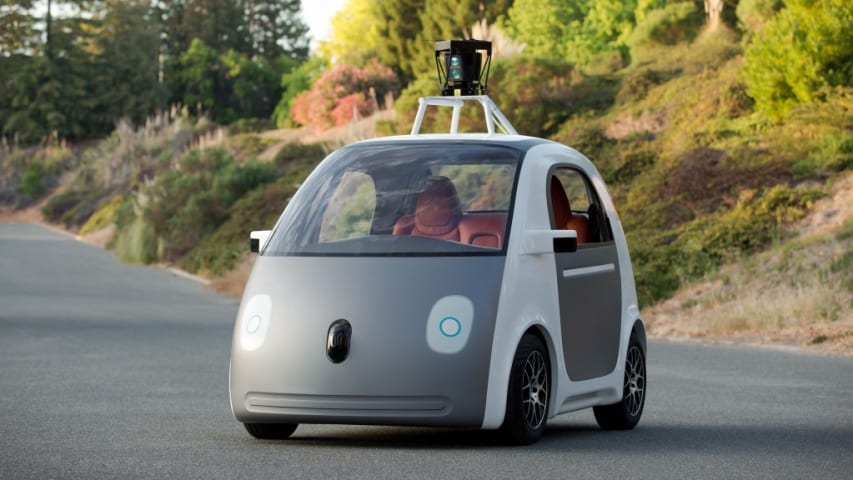
Google has recently announced that new purpose built self driving cars will be unleashed on public roads. The Google cars are known as ‘koala cars’ because they have a small rounded design which gives them an appearance that makes them look like the outback marsupial animal. In a Google blog post, the company explained more of the features of the cars- “They’re ultimately designed to work without a steering wheel or pedals, but during this phase of our project we’ll have safety drivers aboard with a removable steering wheel, accelerator pedal, and brake pedal that allow them to take over driving if needed. The prototypes’ speed is capped at a neighbourhood-friendly 25mph, and they’ll drive using the same software that our existing Lexus vehicles use”.
Self driving cars use a combination of lasers, radar, cameras and software to enable them to ‘see’ the road around them and move about safely. The self driving cars are limited to a slow speed which prevents them from being able to drive autonomously on motorways. While Google has a fleet of 20 Lexus cars, Delphi has been testing just two prototypes in California. Self driving cars are predicted to be the future of driving, and so the current prototype testing may lead the way for models that we will all be riding in the future.