レポート 2306
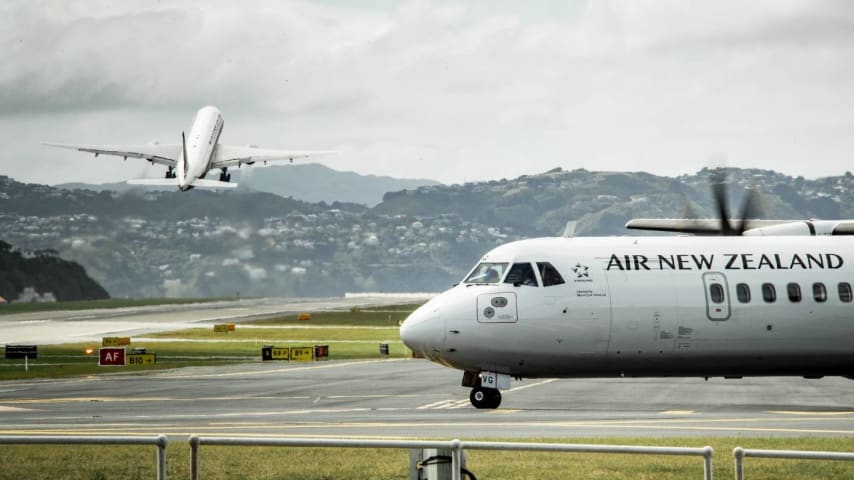
Aviation Security went ahead with the trial of a new facial-recognition scanning tool at Wellington Airport, despite serious concerns from the Privacy Commissioner.
The secretive months-long trial, which is still ongoing, used cameras to scan the faces of passengers when they entered the queue for airport security and again when they went through the boarding gate.
Police came under serious pressure last year after it was revealed they were using similar facial recognition technology.
Wellington Airport’s head of operations Matthew Palliser says with travel back to pre-Covid levels, staff for the various businesses based at the airport are in hot demand. (File photo)
Aviation Security (Avsec) started the trial in June 2021 as a way to count how many passengers were passing through security and how long they were spending in line, after Audit NZ found their manual process inadequate.
After the Privacy Commissioner argued strongly against the trial, AvSec sought separate legal advice on whether it breached privacy law, and followed that advice instead of the Commissioner's.
The agency said that the technology stores a digital record associated with each person’s face only for the time they are in line, then immediately deletes it. They said this digital record was held on a highly-secure server while they do hold it.
The cameras check how long people are in queue at security. (File photo).
But Privacy Commissioner John Edwards said the impact on privacy far outweighed the benefits of the technology in a series of terse letters, obtained under the Official Information Act.
His office argued that there was a risk that the tool could be used by other agencies like the police or intelligence agencies, and could set a precedent for wider Government use of face-scanning technology.
Civil Aviation Minister Michael Wood is also unhappy with the trial, saying he planned to speak to the agency about why the trial was not more publicised.
“I made my views clear earlier this year that it would have been better for the Authority to front-foot the trial, explain the reasons, and commit to engagement with stakeholders afterwards,” Wood said. “Obviously there are still some issues to work through and I will speak with the Civil Aviation Authority on this.”
A sign had been in place indicating to passengers that their faces might be scanned, but this sign was not obvious on Thursday evening. The trial is due to continue until October 21.
CAA chief executive Keith Manch said in a statement that the agency became aware that the sign had gone after Stuff made enquires. He said Covid-19 signage had replaced it but the agency were reinstating the sign.
Edwards last year wrote that the technology was “potentially intrusive and inaccurate” and that the agency had “leapt to this solution without first undertaking a thorough examination of alternatives and less intrusive ways of meeting the legitimate business needs.”
He said he was also worried about the country the facial recognition technology had been developed in – although this location was redacted from the documents that were released.
Police came under serious pressure last year after it was revealed they were using similar facial recognition technology.
“It appears from the documents provided that Avsec have failed to adequately consider the risks inherent in such technology, such as where the facial recognition software was developed, an assessment of what faces the software was tested on and the accuracy rates of the software,” he wrote.
In an October 2020 letter to Civil Aviation Authority board chairwoman Janice Fredric, Edwards repeated these concerns and recommended that the trial not go ahead, despite some mitigation of the privacy issues.
“I recommend to the Board that the trial of the project does not proceed and that Avsec pursues an alternative solution that does not involve facial recognition technology,” Edwards wrote, noting the trial could set a precedent allowing other Government agencies to use such a “high-risk technology”.
“By trading off high privacy risk to individuals for a low return in terms of public benefit Avsec would be creating an unfortunate and dangerous precedent if the trial was to proceed,” he wrote.
Fredric wrote back to Edwards in January this year, noting some new measures intended to minimise the privacy risk, such as photos being deleted within ten minutes and a new internal governance group. But, she said, the agency would proceed with the trial.
It also noted that AvSec had met with the Government Chief Privacy Office at the Department of Internal Affairs, who did not think the trial would breach privacy principles, and had received independent legal advice that found there was a “lack of inherent privacy risks with the project”.
Edwards wrote back saying he still had concerns and that if the trial did proceed the agency should “make plans for the level of public interest in the project”.
Civil Aviation Minister Michael Wood is unhappy with the trial.
Yet AvSec issued no press release about the project and the “What to expect at the airport” section of its website does not mention it.
An AvSec spokesperson said the technology was secure and all biometric information was almost immediately deleted.
“During the period the passenger is in line (usually lasting only a few minutes) the digital signatures are held on a highly secure server. After the signature has been used to count the passenger as they leave the screening point, this information is permanently deleted.”
They said the only database the images were checked against was one of AvSec’s staff, to make sure they weren’t counting them as passengers. The technology was only being used because Audit NZ had told them manually counting passengers was not working.
Clarification: This story has been amended to note that the trial was delayed by several months, and started later than originally planned.