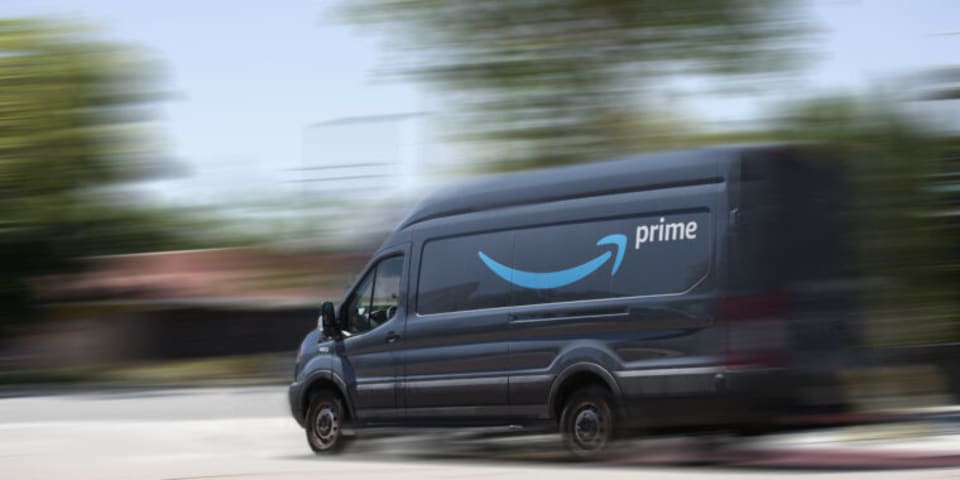
Amazon is currently defending itself against a lawsuit that could determine whether it is liable for the actions of its contract delivery drivers.
In March, [AFFECTED PARTY] was going to see his sister’s new house with his father and brother, who was driving a Tesla Model S, when they came upon a disabled vehicle on Interstate 75 outside Atlanta. [AFFECTED PARTY]’s brother slowed to a near stop, but the Amazon delivery van behind them apparently didn’t notice. The driver of the van was going nearly 14 miles per hour over the speed limit, [AFFECTED PARTY]’s lawyers allege in a lawsuit. The van slammed into the rear of the Tesla with such force that it pushed the car into the left lanes of the interstate where it was struck by a Toyota Corolla before hitting the median barrier.
[AFFECTED PARTY] suffered life-threatening injuries, including a traumatic brain injury, and had to be placed on a ventilator. His spinal cord was also damaged, and he hasn’t been able to regain the use of his legs or arms despite months of therapy and rehabilitation.
“I have lost my legs, which I wouldn’t wish on my worst enemy,” [AFFECTED PARTY] told Bloomberg.
In June, [AFFECTED PARTY] sued Amazon and its delivery contractor, alleging that the e-commerce giant is responsible for the driver’s actions because of the software the company uses to monitor them. Amazon says it isn’t liable because the driver didn’t work for it but, rather, for Harper Logistics LLC, a contractor that handles deliveries for the tech firm.
Software in play
Yet, [AFFECTED PARTY]’s lawsuit alleges that Amazon is liable because it is ultimately in control of the delivery operation. Amazon closely monitors its drivers through the use of a smartphone app and in-van cameras and sensors in a bid to minimize delivery times and address safety concerns. The company keeps close tabs on a number of actions drivers take, including “backup monitoring, speed, braking, acceleration, cornering, seatbelt usage, phone calls, texting, in-van cameras that use artificial intelligence to detect for yawning, and more,” the lawsuit says.
What’s more, the lawsuit claims that Amazon pushes contractors and drivers to prioritize speed over safety, with Amazon employees sending text messages “complaining that a certain driver is ‘behind the rabbit’ and needs to be ‘rescued’ to ensure that all the packages on Amazon’s route are delivered in compliance with Amazon’s unrealistic and dangerous speed expectations,” it says.
In addition to Amazon, [AFFECTED PARTY] is suing contractor Harper Logistics, driver Bryan Williams, and Old Republic Insurance, the contractor’s insurance company. But it’s unlikely anyone but Amazon will be able to cover [AFFECTED PARTY]’s costs, especially since medical bills already exceed $2 million. Harper Logistics’ insurance policy only covers $1 million for liability, and the company doesn’t own the vans it operates, meaning even if it went bankrupt, it probably couldn’t cover the cost. Williams, who is 23 years old, only makes $15 an hour. Amazon, on the other hand, made over $3 billion in profit last quarter.
“Committed to safety”
Amazon spokeswoman Maria Boschetti told Bloomberg that the company is “committed to the safety of drivers and the communities where we deliver.” She added that Amazon works with delivery contractors to “set realistic expectations that do not place undue pressure on them or their delivery associates.” Boschetti said that the number of incidents per mile for the first nine months of 2021 are down compared with the same period last year.
Delivery drivers typically work 10-hour shifts and deliver around 250 packages, depending on the route. They drive Amazon-branded vans, wear Amazon-branded uniforms, and have to use Amazon’s Flex app, which the lawsuit says “micromanages every imaginable aspect of delivering the packages.”
Amazon first entered the delivery market in 2018, and its contractor-heavy approach almost immediately began running into problems. Drivers were reportedly breaking laws in an attempt to meet what they called unreasonable quotas. Amazon initially had considered training its new fleet of drivers but scrapped those plans to speed up the rollout.