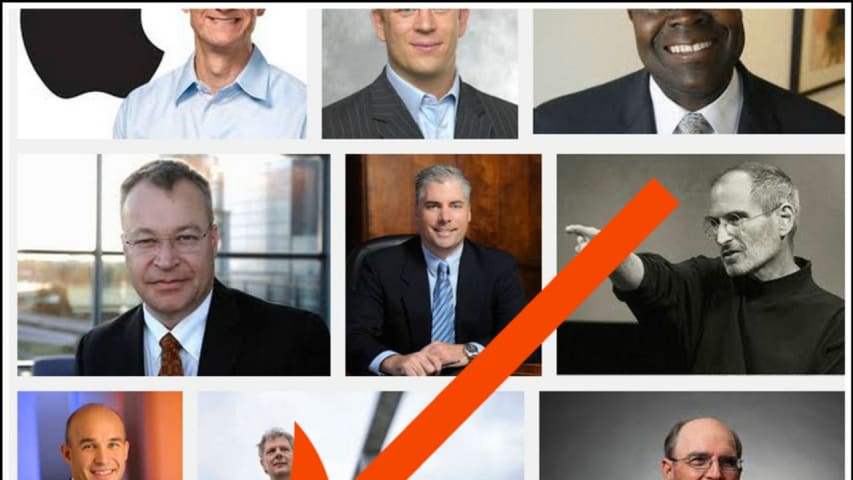
Try this: Google image "CEO." Notice anything? The first female Google image search result for "CEO" appears TWELVE rows down—and it's Barbie.
A recent study conducted at the University of Washington sought to examine how well female representation in online search results reflected reality—and, subsequently, how impressions in search results could, in turn, impact the way that people perceive how women are represented in industry, in real life.
"You need to know whether gender stereotyping in search image results actually shifts people's perceptions before you can say whether this is a problem," UW assistant professor of human-centered design and engineering says. "And, in fact, it does—at least in the short term."
How skewed—and how much does it skew perceptions, then, that the first female image result in Google for "CEO" is Barbie, appearing 12 rows (and two page scrolls) down?
The study first compared the percentages of women who appeared in the top 100 Google image search results in July 2013 for different occupations—from bartender to chemist to welder—with 2012 U.S. Bureau of Labor statistics showing how many women actually worked in that field.
In some jobs, the discrepancies were pronounced, the study found. In a Google image search for CEO, 11 percent of the people depicted were women, compared with 27 percent of U.S. CEOs who are women.
Twenty-five percent of people depicted in image search results for authors are women, compared with 56 percent of actual U.S. authors.
By contrast, 64 percent of the telemarketers depicted in image search results were female, while that occupation is evenly split between men and women.
Researchers found that around seven percent of test subjects shown skewed search results shifted their estimates of how many women and men are employed in different industries—"Small exposures to biased information over time can have a lasting effect on everything from personal preconceptions to hiring practices," the study reports.
What do you think about this? Are there other industries and/or job titles you've noticed this happen in? Tell us in the comments below.